Articles
What I learn building software with AI agents, written down as I go: the measurements, the calls I made and why, the guardrails, and what hurt.
Deployed at Home
A four-part series. I rewrote a small guesthouse's back office with two AI agents, Claude Code as architect and DeepSeek as the developer, and treated it the way a forward deployed engineer treats a customer: measure first, make the call in writing, turn the lessons into tools, keep both sides talking.
Every diagram is drawn from the real system. Nothing here is a product announcement.
, 8 min read
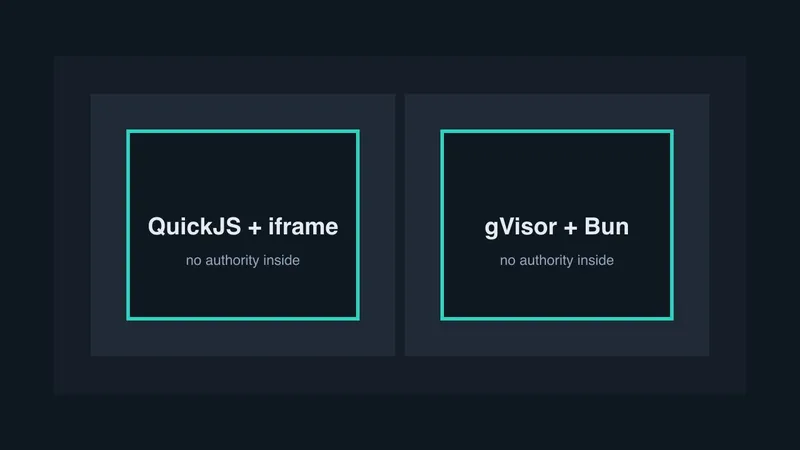
If your model writes code, run it in a secure sandbox. Here are two ways to build one.
If you want a model to generate code, you have to secure the place where that code runs. Prompts, output filters and "please don't" instructions are not a boundary.
, 12 min read
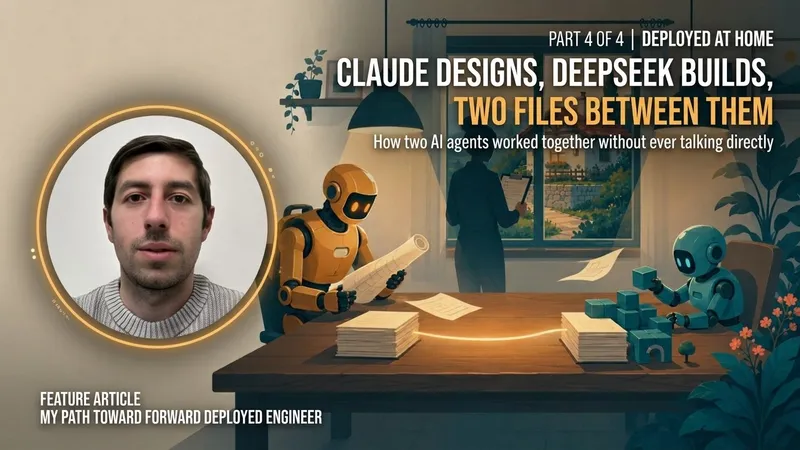
Claude designs, DeepSeek builds, and they only talk through two files
Parts 1 to 3 covered why I rewrote my guesthouse back office, what I rewrote it into, and the guardrails that refuse unverified work.
, 9 min read
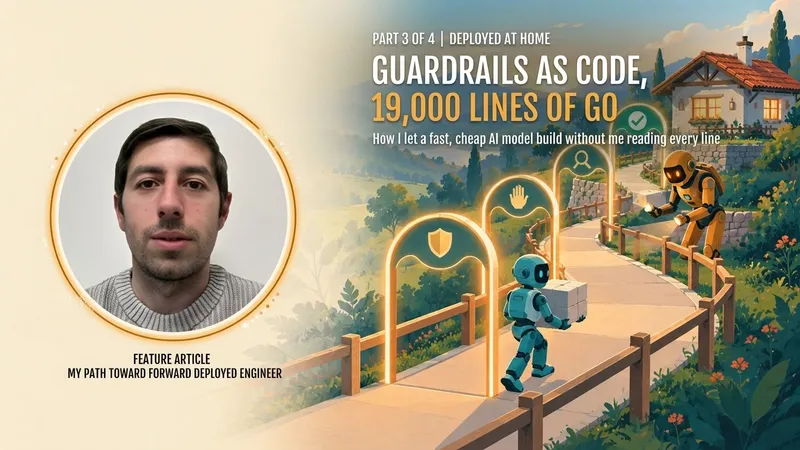
Guardrails as code: how I let a fast, cheap model write 19,000 lines of Go
In Part 2 I described rewriting my guesthouse back office in Go. DeepSeek V4.1 Flash wrote most of the code, running in DeepSeek Harness.
, 13 min read
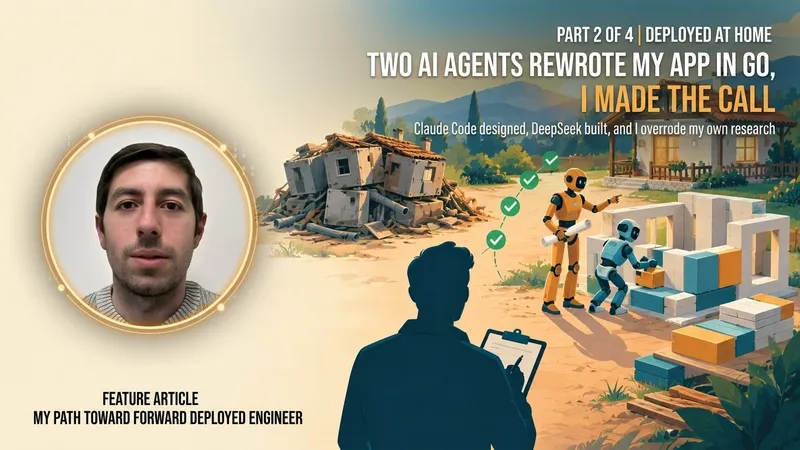
Claude Code and DeepSeek rewrote my app in Go in three days. I made the call.
In Part 1 I measured my .NET back office on a laptop pretending to be a Hetzner server. The conclusion was clear: a lighter identity stack would save about half a gigabyte, worth €96 to €192 a year, and would not change which server I buy.
, 11 min read
Before I rewrote anything, I measured it
A forward deployed engineer works inside a customer's operation. The job is to find the real problem behind the request, build against the customer's actual environment, and stay with it until it runs in production.
Building something like this?
If you are putting agents, a harness or retrieval into a real business, book a call. I will tell you what I would do and what I would avoid.